The Fayum A Culture
Understand How Egypt's Earliest Known Farmers Lived Beside a Desert Lake, and Why Archaeologists Still Debate Their Story
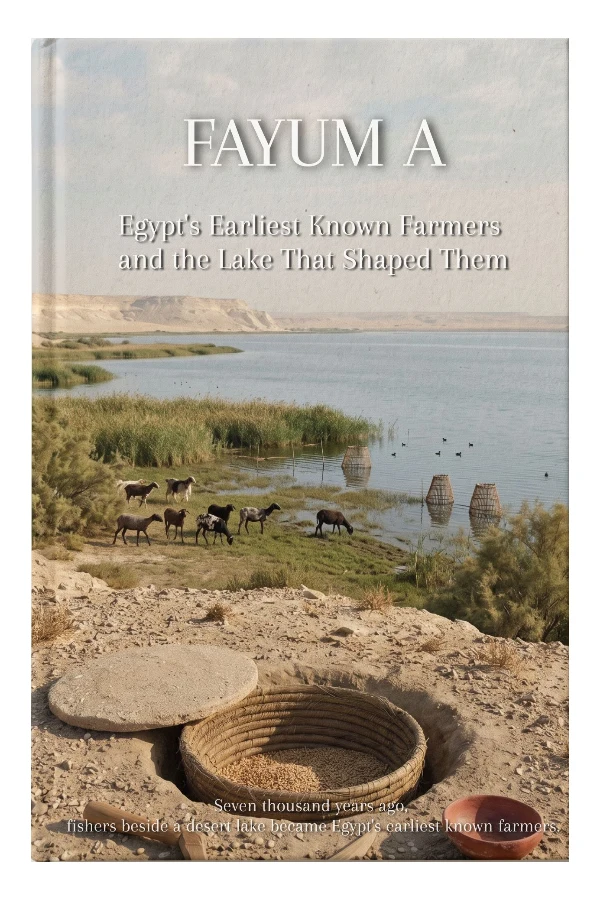
Long before the pharaohs, on the northern shore of a lake west of the Nile, people began to combine fishing with crops and livestock brought from far away. Archaeologists call them the Fayum A culture. Their basket-lined granaries, flint sickles and polished pottery have made them a fixture of textbooks as Egypt's first farmers. But a century of research has turned that simple picture into one of the liveliest debates in the archaeology of northeastern Africa. This book traces that research from the ground up. It draws on original excavation reports, peer-reviewed studies and museum collections to show what the evidence actually says, where it is thin, and why specialists reading the same sites can reach opposite conclusions. Every technical term is explained in plain language. A look inside: Chapter 3, A Greener Sahara and Its Ending: why the Fayum became a refuge as rain retreated from the desert. You'll see the climate shift that framed every choice the lake's people made. Chapter 6, Caton-Thompson and Gardner: the archaeologist and the geologist who first mapped the north shore. You'll understand where the classic picture of the culture came from, and why it is still cited. Chapter 12, The Granaries of Upper and Lower K: pits on a desert ridge that still held grain when they were opened. You'll learn what their construction says about storage, trust and planning. Chapter 14, Sheep, Goats, Cattle and Pigs: what the herds of the Fayum were for. You'll see how animal bones are read, and what they can and cannot reveal. Chapter 15, Fish, Fowl and Wild Game: a farming culture built on a fishery. You'll understand how the lake set the rhythm of the year. Chapter 20, Village or Tethered Camps? The Kom W Debate: the argument that divides today's specialists. You'll be able to weigh both sides for yourself. Chapter 22, Legacy: From the Lake Shore to the Museum Drawer: why these sites are under threat, and what remains to be learned. Who this book is for: readers of ancient history and archaeology, students, museum visitors, travellers to Egypt and anyone curious about how farming spread. 22 chapters, about 47,000 words, with a full bibliography.
Book video
- Genre
- History & civilization
- Format
- Ebook
Bundle including this book
Liberal Arts Bundle
This book is also available as part of a bundle.
View bundle ↗