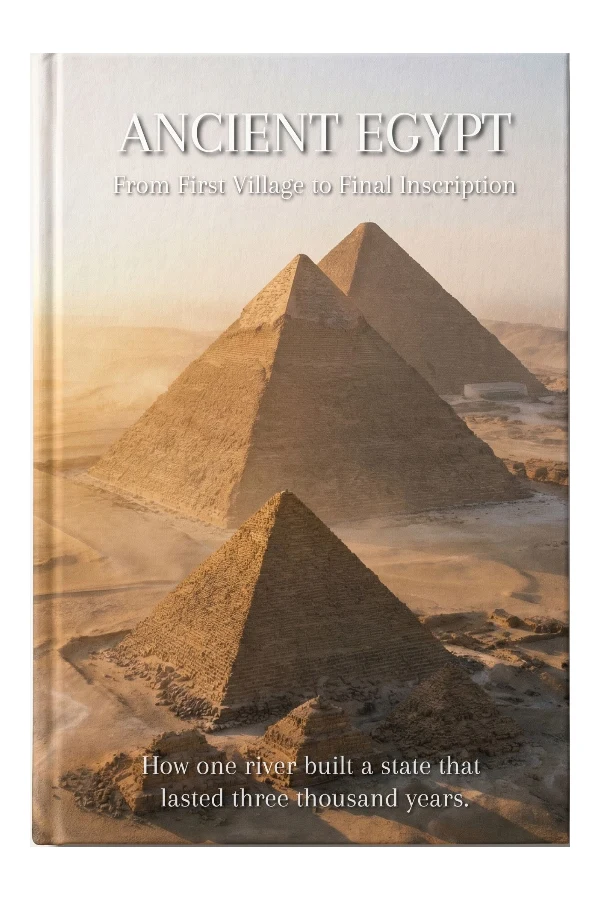
Ancient Egypt from First Village to Final Inscription
Learn When the Pharaohs' State Began, How the Pyramid Crews Worked, and Why Its Temples and Script Were Abandoned
Description: Ask when Egyptian civilization began and you will be given dates thousands of years apart. Ask why it ended and the answers disagree by more than six centuries. The problem is rarely a lack of information. It is that most accounts never say what they are measuring. This book is a clear, evidence-first account of ancient Egypt from the first farming villages on the Nile to the last hieroglyphic inscription. It explains not only what happened but how we know it: which inscriptions, papyri, excavations and scientific studies each claim rests on, and where the record is still open. Inside, you will find a working timeline, a portrait of the Egyptian state and the people who kept it running, and straight answers to the questions readers ask most often. A look inside — seven chapters from the 24: Chapter 7: How the Pyramids Were Actually Built Hook: The working logbook of an official who shipped limestone to Giza has survived. What you gain: a grounded picture of the supply chain, the workforce and the open questions, so you can tell a real unknown from a conspiracy claim. Chapter 10: Amarna: The One Time Egypt Changed Its Mind Hook: One king built a new capital for a new god — and his successors tried to erase him. What you gain: a clear reading of Egypt's most radical religious reform and why it did not last. Chapter 14: How Ancient Egypt Really Ended Hook: There are four candidate end dates, and each one marks the end of something different. What you gain: a way to answer "when did ancient Egypt end?" precisely instead of picking a number. Chapter 16: Death, Mummies, and the Business of Eternity Hook: Mummification had price tiers. What you gain: an understanding of the tomb as a system, and of what royal mummies tell modern science. Chapter 17: Four Scripts, One Language, Four Thousand Years Hook: Egyptians wrote their one language in four different scripts. What you gain: how the script works, why it was forgotten, and how it came to be read again. Chapter 21: Government, Law, Taxes and Trade Hook: A state with no coins that still kept careful accounts. What you gain: a working model of how grain, labour and records held the country together. Chapter 23: Legacy, Museums, and Egypt Today Hook: The famous mummies are not where many visitors expect to find them. What you gain: a practical guide to what is displayed where, and to the discoveries of the last few years. Who this book is for: curious adult readers, students and teachers who need reliable dates and definitions, and travellers preparing for Egypt or a major Egyptian collection. The final chapter turns the book into study material, with answers at several lengths, project briefs and a self-test. 24 chapters, about 51,000 words, written in plain English and grounded in peer-reviewed research, museum collections and established academic reference works.
Book video
- Genre
- History & civilization
- Format
- Ebook