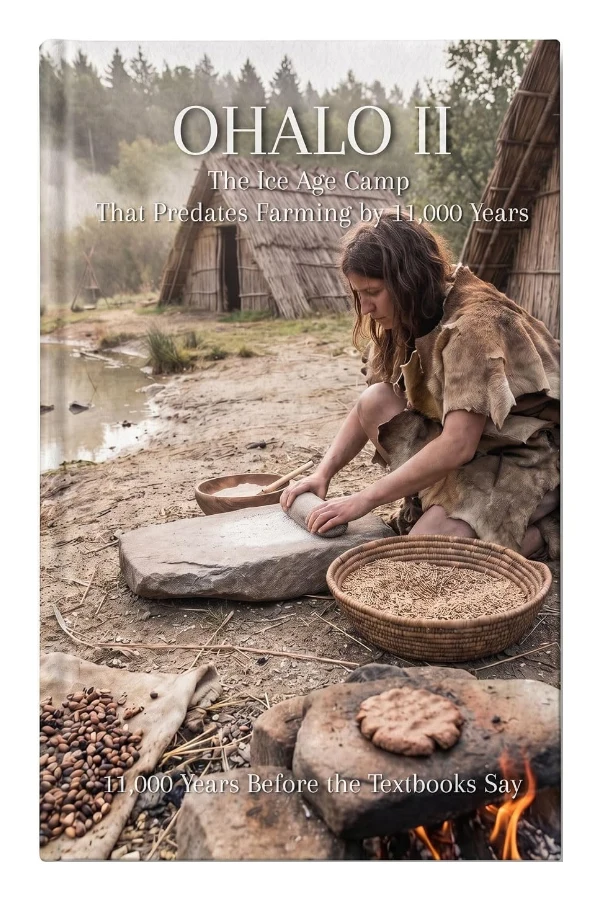
Ohalo II
What a 23,000-Year-Old Ice Age Camp Reveals About the Origins of Farming
Twenty-three thousand years ago, in the coldest stretch of the last ice age, a small community on the shore of the Sea of Galilee was already managing wild grain, building shelters meant to last, and organizing a settlement with a level of intention that does not fit the old picture of hunter-gatherers as purely reactive survivors. A 1989 drought exposed the site by accident, and what came out of the ground has been complicating the standard farming timeline ever since. This book walks through the physical evidence, chapter by chapter, without shortcuts and without overstating what the data can and cannot prove. Inside, a hand-picked look at what the book covers: Chapter 1 — What Is Ohalo II? Overview and the Shock of Discovery. Hook: a 1989 drought exposed a secret that had waited 23,000 years underwater. Benefit: you will understand exactly how the site was found and why archaeologists still consider it one of the most important prehistoric discoveries on record. Chapter 5 — The World's Oldest Bed. Hook: long before pillows or mattresses, someone wove a bed built to last through an ice age winter. Benefit: you will see what a single sleeping mat reveals about how Ice Age people thought about comfort, rest, and home. Chapter 7 — Evidence of Proto-Agriculture? What 13 Proto-Weed Species Are Asking Us. Hook: thirteen weed species buried in the grain may be the earliest fingerprint of farming ever recovered. Benefit: you will walk through the case for early cultivation, and the counterarguments serious researchers still raise against it. Chapter 9 — Faunal Remains: Fishers and Hunters Combined. Hook: fish bones, gazelle, and waterfowl tell a story no single food source could tell alone. Benefit: you will understand how a broad-spectrum diet let one community outlast the harshest climate on record. Chapter 12 — The Burial at Ohalo II. Hook: one man, buried with evident care, carries a life story written directly into his bones. Benefit: you will meet the individual known as H2 and see what his skeleton reveals about health, hardship, and how his community treated its dead. Chapter 15 — Ohalo II's Legacy. Hook: a single lakeshore camp is quietly reshaping how textbooks describe the birth of farming. Benefit: you will come away with a clear, evidence-based picture of why this site keeps resurfacing in the biggest debates in archaeology. This is a book for readers who want the archaeology itself: the dating methods, the plant counts, the competing hypotheses, and the open questions researchers have not yet settled. No prior background in archaeology is assumed.
- Genre
- Space & science
- Format
- Ebook