The Naqada Culture of Ancient Egypt
Understand How Prehistoric Villages Along the Nile Became a Kingdom, Told Through Graves, Pottery and Ancient DNA
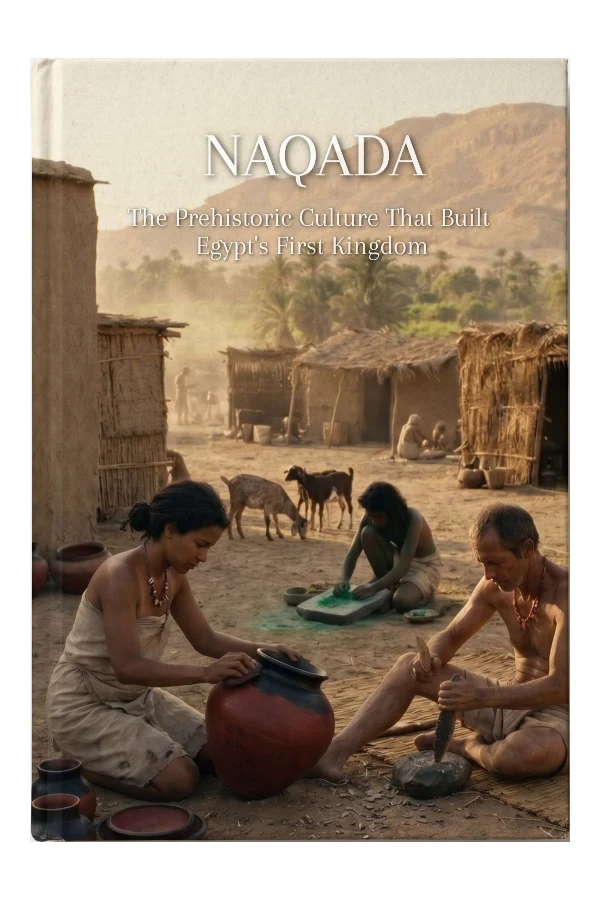
Long before the pyramids, the Nile Valley was a land of farming villages. Within roughly seven centuries, those villages had become a kingdom ruled by one king. This book explains how that happened, drawing on the archaeology of the Naqada culture of Upper Egypt. Named after the site where Flinders Petrie excavated close to three thousand graves in the 1890s, the Naqada culture is divided into three phases, from the painted bowls of Naqada I to the royal names of Naqada III. Each chapter takes one question that readers ask and answers it from radiocarbon dating, excavation reports, skeletal studies, museum records and recent ancient-genome research. Inside, you will find: Chapter 3: Counting Time Without Writing How a pottery sequence and radiocarbon modelling gave calendar dates to graves with no inscriptions. You will see why the story of Egypt's origins became shorter and faster than older books suggest. Chapter 7: The Elite Cemetery at Hierakonpolis Masks, wooden halls and buried wild animals in the tombs of the first leaders. You will understand when inequality appeared and how it was put on display. Chapter 9: Naqada Culture Pottery, Reading History in Clay Black-topped jars, painted boats and the wavy handle that became a clock. You will be able to look at a predynastic pot in a museum and know what it tells. Chapter 12: Ordinary Lives at the Workers' Cemetery The graves of the people who brewed the beer and built the town. You will see the Naqada world from the bottom up, not only from the richest tombs. Chapter 15: Naqada Culture DNA, What Ancient Genomes Can and Cannot Say What the first genomes from early Egypt show, and what they cannot yet show. You will be able to judge new headlines about the origins of the Egyptians for yourself. Chapter 19: Beyond the Valley, Mesopotamia, the Levant and Nubia Lapis lazuli, imported wine and foreign motifs in a Nile Valley culture. You will understand how connected this early world already was. Chapter 21: Signs Before Script, the Labels of Tomb U-j Small inscribed labels from a royal tomb at Abydos. You will follow the debate over whether Egyptian writing began here. Written in clear prose for general readers, students and travellers, the book is organized in 23 chapters of about 45,000 words, followed by chapter-by-chapter notes on sources and a full bibliography. It sets out what the evidence shows, how it was obtained, and where the open questions still lie.
- Genre
- History & civilization
- Format
- Ebook